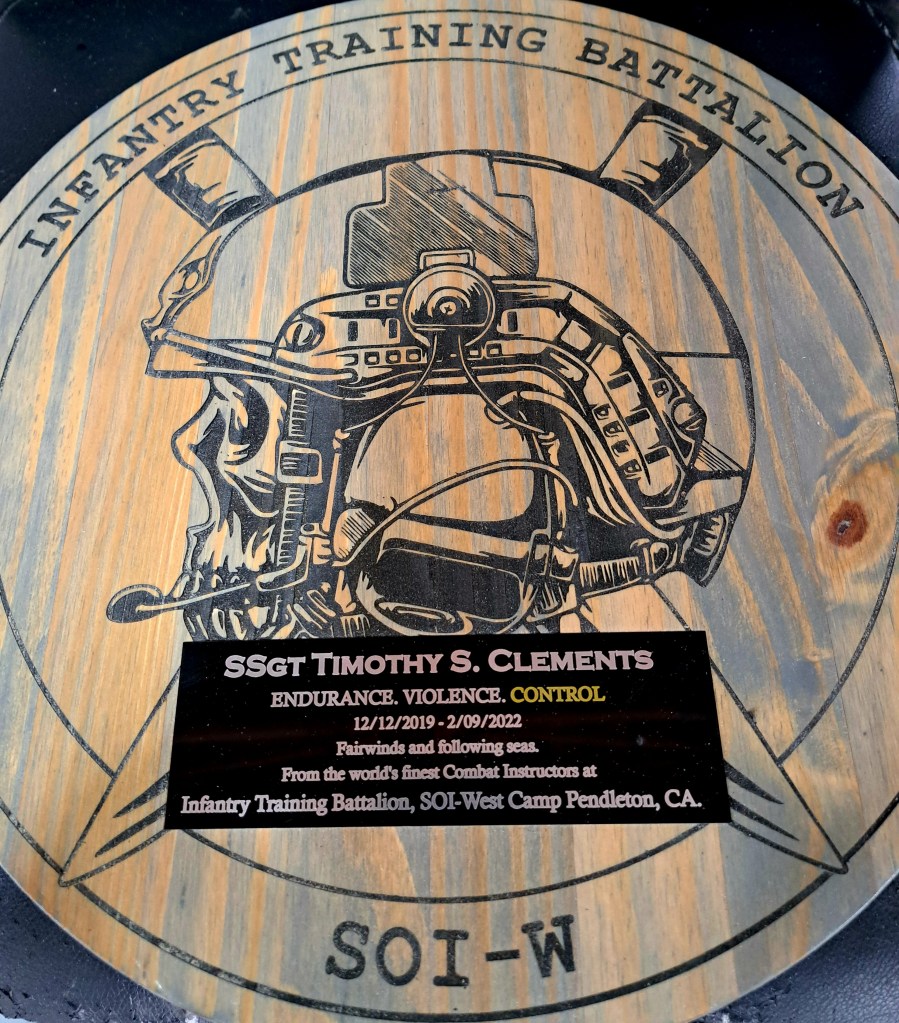
Having spent sixteen years in the most testosterone-driven, alpha male-dominated, shame-based military culture in the world (in my opinion) – the United States Marine Corps – I have witnessed practically every type of bravado and posturing there is. To describe posturing, think of two bucks competing for a doe. They both bow up and make their necks and chest as big as they can in hopes of scaring off the competition and “winning the girl”. Sometimes that works, but sometimes it does not. In that case, a violent clash of antlers ensues to determine who the dominant buck will be. When the dust settles, the one who runs off in shame loses, and the one who holds his ground earns the right to procreate. There are many qualities I love about Marines: how they – no matter how big or small -never back down from a fight when it’s warranted; how they “run to the sound of gunfire” and fight with a fierceness that should frighten any enemy; but the trait I most admire about the Marine infantry is control. Control in the context of combat is the ability to annihilate, but the wisdom to know when to exercise restraint…strength under control. Certainly, there have been times in history when control has not been displayed, but with advances in weapons and technology, this trait is increasingly being taught and implemented. Looking at the two words on the plaque in the picture, “Violence” and “Control”, one might think they are oxymoronic; but in fact, they are what separate us from our enemies. Those two words are what make our military the finest fighting force in the world, and America the most sought-after place of refuge.
There is a word in the Bible that describes strength under control, and it is the word Meekness. This is not a popular topic today, but a spiritual fruit that should be discussed and developed in followers of Jesus. The reason meekness is probably the least sought-after Christ-like quality is because we possess an opposite trait that is often more dominant: pride. Would it surprise you to know that this one thing – pride – is the source of ALL sin and evil in the world? When Lucifer, the most beautiful of all the angels, was cast by God from heaven to earth with a third of the angels, it was because he said to himself, “I will ascend above the heights of the clouds, I will be like the Most High” (Isaiah 14:14). Had he truly wanted to be like God, he would have known that one of the things God hates the most is “a proud look” (Proverbs 6:17). He would have recognized that God’s motive for creating was to reveal His good, benevolent nature, and to express His infinite love (Isaiah 57:15; Psalm 113:5-6; Exodus 34:6-7; Malachi 1:2; 1 John 4:19).
As followers of Jesus, if we possess God’s Holy Spirit (Ephesians 4:30), and if pride is a trait the Lord hates, then we should wisely strive to put down our pride and seek the good qualities He loves (Galatians 5:16;22-26). The opposite of pride is humility. So, what do humility and meekness have in common? How do they go together? It might best be explained this way: humility is the root; meekness is the fruit. And God has given us the BEST example of humility and meekness in His Son Jesus Christ.
When Jesus arrived in earthly flesh, the Jews were controlled by the Roman empire, a culture steeped in emperor worship, absolute power, and male dominance in every way. Physical beauty, masculinity, and ruthlessness were promoted, while mercy, compassion, and kindness were viewed as feminine and weak. Regarding physical appearance, one would assume that a God-man would be the most handsome specimen on earth, right? Yet, Isaiah prophesied in Isaiah 53:2 about Jesus that “There was nothing beautiful or majestic about his appearance, nothing to attract us to him” (NLT). As for pride, or anything remotely resembling pride? Yeshuah did not have one ounce! Contrary to culture, Jesus came as a servant to the lowest of the low in society, ministering largely to those who were viewed as rejects and outcasts (Matthew 11:25). And what about His teachings? He dared say things like: “If anyone desires to be first, he shall be last of all and servant of all” (Mark 9:35); and “Blessed are the meek, for they shall inherit the earth” (Matthew 5:5); and “…love your enemies, bless those who curse you, do good to those who hate you, and pray for those who spitefully use you and persecute you” (Matthew 5:44); and “…whoever desires to save his life will lose it, but whoever loses his life for My sake will save it” (Luke 9:24). These revolutionary teachings and many more were taught and embodied in the Son of Man. In short, His teaching put down self and exalted others to the glory of God.
Despite all this, the Man from Galilee repeatedly exhibited His power by commanding demons to flee, sickness to depart, the wind and waves to cease, the dead to rise to life, and sins to be forgiven. Yes, Jesus possessed the power to overthrow Rome and set up His Kingdom, yet He subjected Himself to betrayal, false accusations, cursing, mocking, beatings, and ultimately crucifixion on a Roman cross. At any point He could have called 12 legions of angels to rescue Him (Matthew 26:53), but He did not. An interesting sidenote is that of the few words Jesus spoke during His trial, He sought to bring the Roman governor down a few notches, in John 19:10-11: “Pilate said to Him, ‘Are you not speaking to me? Do you not know that I have power to crucify You, and power to release You?’ Jesus answered, ‘You could have no power at all against Me unless it had been given you from above.” Nonetheless, as Jesus hung on the cross, even with His conspirators mockingly encouraging Him to save Himself, He said “Father, forgive them, for they know not what they do” (Luke 23:34). Why would He subject Himself to all of this? Not just subject Himself to it, but repay evil with good in the midst of it? It was more than just “practice what you preach”. It certainly wasn’t an act. It wasn’t as if Jesus was marking off some imaginary checklist. Yes, it was His Father’s will that He could not disobey – the most necessary of sacrifices – so that we could be saved (Matthew 26:39; 2 Peter 3:9). Yes, Jesus died on the cross because of His infinite love for us (John 3:16; Romans 5:8). But more than that, the humility and meekness – the ultimate strength – expressed by Jesus naturally flowed out of His character; it is Who He is! Jesus said in Matthew 11:29, “Take My yoke upon you and learn from Me, for I AM GENTLE AND LOWLY IN HEART, and you will find rest for your souls.” Jesus the Messiah, the Son of God, King of Kings, and Lord of Lords is HUMBLE and MEEK! This is why Paul said in Philippians 2:5-8, “Let this mind be in you which was also in Christ Jesus, who, being in the form of God, did not consider it robbery to be equal with God, but made Himself of no reputation, taking the form of a bondservant, and coming in the likeness of men. And being found in appearance as a man, He humbled Himself and became obedient to the point of death, even the death of the cross.” Let this mind be in you! But how?
Be a follower of Jesus. Daily meditate on His Word, spend quality time with the Most High in prayer, obey His commands, and do what Jesus did. Surrender yourself to Him, and He will do the rest. And as the Creator of all things – the Epitome of strength under control – was exalted three days later (Philippians 2:9-11), so will you be exalted in due time: “…for everyone who exalts himself will be humbled, and he who humbles himself will be exalted” (Luke 18:14).
 Finish With Joy
Leave a comment