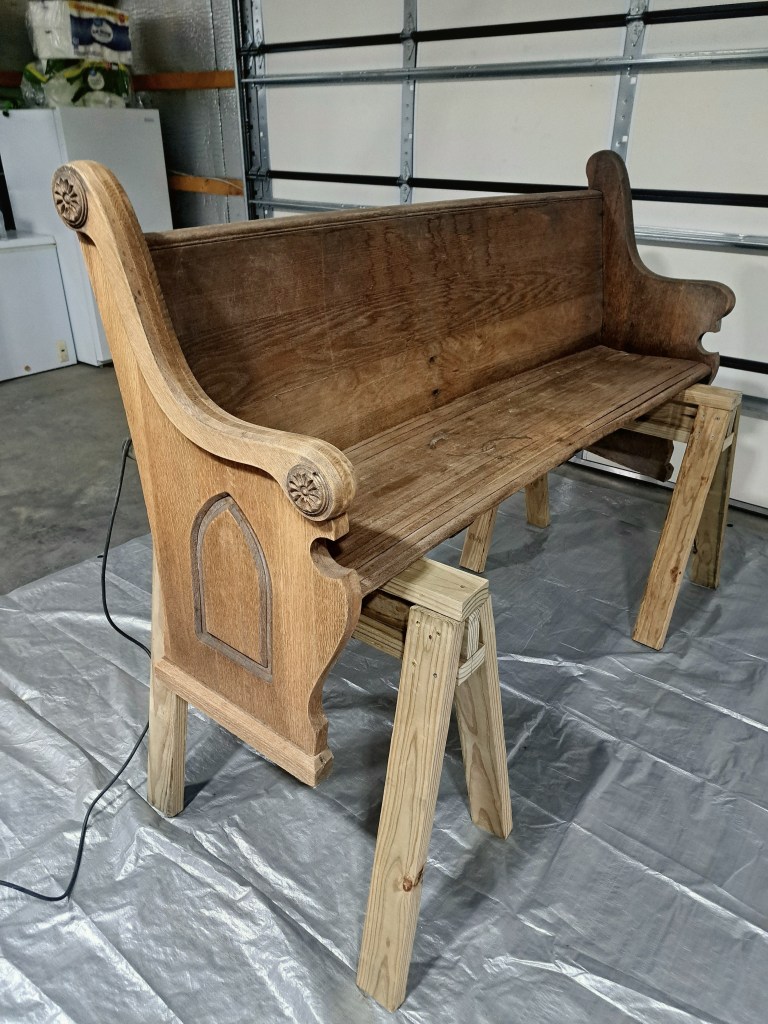
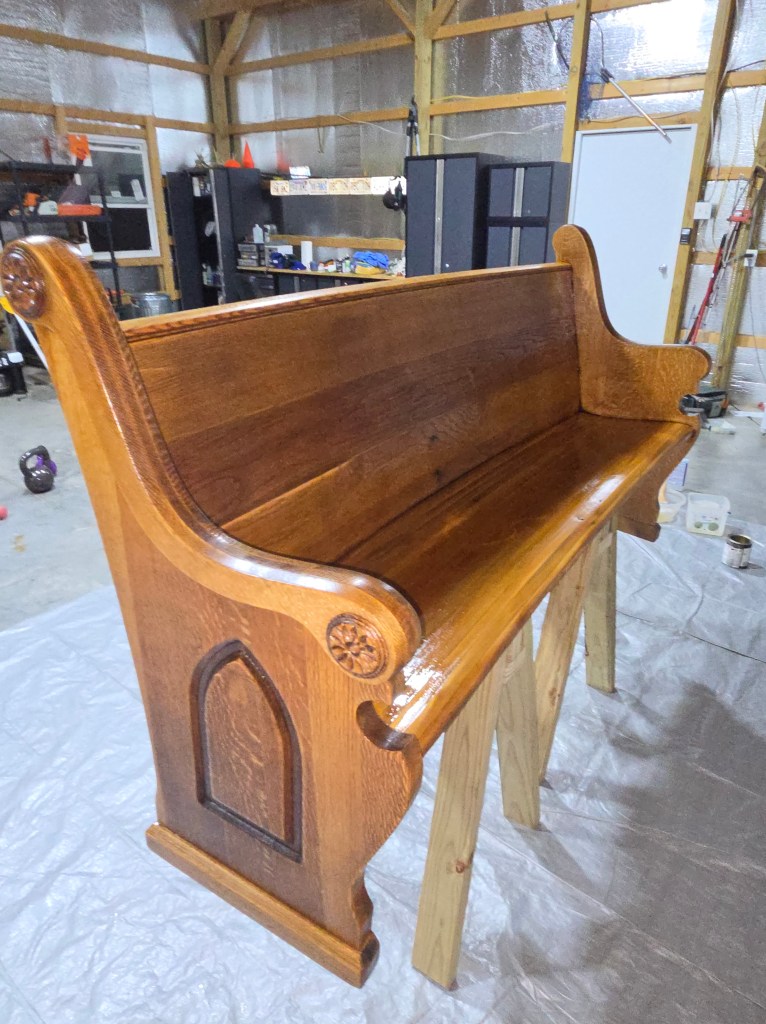
This old pew came from Cambria Baptist Church near the old mining town of Hartshorne, Oklahoma. My wife went there as a child, as did her mother and grandmother, with her great grandfather once serving as pastor of the church. As with most old things, this pew has a story if you care to listen. Once fresh and new, cut from 100-year old oak, this pew served a great purpose—no, a mission. There is no telling how many people it held over the years, especially in its prime: tall and short, rich and poor, young and old. It welcomed them all. If it could talk, what stories it would tell. It would remember powerful sermons, tearful prayers, and beautifully sung hymns. It would recall weary saints seeking comfort, and sinners sitting uncomfortably as they heard the gospel preached. It would remember conflicted souls gripping its back with white knuckles during the invitation hymn, wrestling with God. And how many finally loosened their grip, let go, and walked forward on the last verse of “Just As I Am” or “I Surrender All”? Yes, this pew was a well-crafted piece of furniture, built with care and dedicated to a holy purpose, which it served well. But time marches on. The years brought neglect. Dust settled where people once gathered. The seasons changed, and fewer and fewer sat within its rows. The church grew quiet. The wood became worn. Joints loosened. Parts began to fall apart. Then the faithful few became none.The quiet became silence. And one day, after more than a century in the place it called home, this old pew was detached from the floor and carried away. It was hauled from one place to another, even left outside to face the weather. Its best days seemed long gone. But then something unexpected happened. It met the gaze of a familiar face—someone who had once sat upon it as a child; someone who saw beyond the cracks, beyond the faded finish, beyond the years of neglect; someone who saw its story. And because they recognized its value, they carefully restored it. Today it may not be as beautiful as it was when it first left the craftsman’s floor, but it has been repaired. It has been given new life, a fresh shine, and a new purpose. Now, instead of hearing sermons, hymns, and prayers, it will hear laughter. Instead of holding strangers, it will hold generations of family—fathers and mothers, children and grandchildren. It will likely be colored on, climbed over, hidden under, jumped from, and occasionally tripped-over. But it will be loved, valued, and used. Its beauty has been restored so its story can continue. And perhaps that is why this old pew matters. Because this pew is not just a pew. It is a picture of us. Like this pew, we were crafted with purpose. We were made by the hands of our Creator for His glory. Yet sin, time, suffering, and neglect leave their marks. We become worn and carry scars. Sometimes we feel forgotten, discarded, or past our usefulness.The world often sees only the weathered surface. But God sees the story. He sees what He created. He sees the value others overlook. He sees what can be restored. Throughout Scripture, God delights in taking what is broken and making it whole, taking what is lost and bringing it home, taking what appears finished and giving it new purpose.The old pew could not restore itself. It needed someone willing to see beyond its condition and invest the time, effort, and care required to bring it back to life. So do we. That is the beauty of the Gospel. Jesus Christ looked upon sinners worn by sin, broken by failure, and destined for destruction, and He saw something worth redeeming. Through His death and resurrection, He made a way for us not merely to be repaired, but to be made new. Perhaps that is the greatest lesson this old pew has to teach. Never judge worth by appearance. Never assume a story is over because it has grown old. And never forget that the Master Craftsman is still in the business of restoration. After all, some of His finest work begins with things the world has tossed aside.


Leave a Reply